Spring - @CompentScan全解

【摘要】
文章目录
基本使用excludeFiltersincludeFilters
@ComponentScan.Filter4种类型自定义FilterType
基本使用
在配置...

基本使用
在配置类上写@CompentScan注解来进行包扫描
@Configuration
@ComponentScan(basePackages = {"com.artisan"})
public class MainConfig {

}
- 1
- 2
- 3
- 4
- 5
excludeFilters
@Configuration
@ComponentScan(basePackages = {"com.artisan"},excludeFilters = {
        @ComponentScan.Filter(type = FilterType.ANNOTATION,value = {Controller.class}),
        @ComponentScan.Filter(type = FilterType.ASSIGNABLE_TYPE,value = {ArtisanService.class})
})
public class MainConfig {
}
- 1
- 2
- 3
- 4
- 5
- 6
- 7
这里会 排除标注了@Controller注解 和 特定的ArtisanService ,不会被加载到IOC容器中。

includeFilters
若使用包含的用法, 需要把useDefaultFilters属性设置为false(true表示扫描全部的)
@Configuration
@ComponentScan(basePackages = {"com.artisan"},includeFilters = {
        @ComponentScan.Filter(type = FilterType.ANNOTATION,value = {Controller.class, Service.class})
},useDefaultFilters = false)
public class MainConfig {
}
- 1
- 2
- 3
- 4
- 5
- 6

@ComponentScan.Filter
4种类型
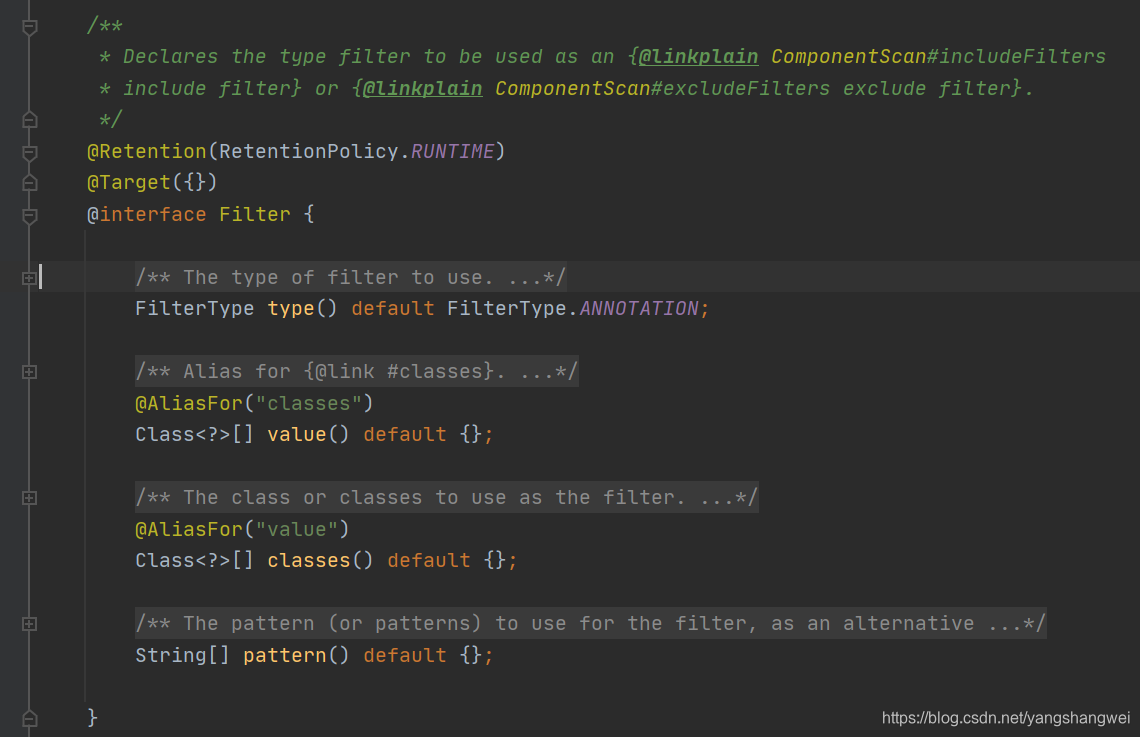
-
注解形式的FilterType.ANNOTATION
比如@Controller @Service @Repository @Compent -
指定类型的 FilterType.ASSIGNABLE_TYPE
@ComponentScan.Filter(type = FilterType.ASSIGNABLE_TYPE,value = {ArtisanService.class})- 1
- 2
-
aspectj类型的 FilterType.ASPECTJ(不常用)
-
正则表达式的 FilterType.REGEX(不常用)
-
自定义的 FilterType.CUSTOM
自定义FilterType
import org.springframework.core.io.Resource;
import org.springframework.core.type.AnnotationMetadata;
import org.springframework.core.type.ClassMetadata;
import org.springframework.core.type.classreading.MetadataReader;
import org.springframework.core.type.classreading.MetadataReaderFactory;
import org.springframework.core.type.filter.TypeFilter;

import java.io.IOException;


public class ArtisanFilterType implements TypeFilter {

    @Override
    public boolean match(MetadataReader metadataReader, MetadataReaderFactory metadataReaderFactory) throws IOException {
        //获取当前类的注解源信息
        AnnotationMetadata annotationMetadata = metadataReader.getAnnotationMetadata();

        //获取当前类的class的源信息
        ClassMetadata classMetadata = metadataReader.getClassMetadata();
        //获取当前类的资源信息
        Resource resource =  metadataReader.getResource();
        System.out.println("类的路径:"+classMetadata.getClassName());
        if(classMetadata.getClassName().contains("dao")) {
            return true;
        }
        return false;
    }
}
- 1
- 2
- 3
- 4
- 5
- 6
- 7
- 8
- 9
- 10
- 11
- 12
- 13
- 14
- 15
- 16
- 17
- 18
- 19
- 20
- 21
- 22
- 23
- 24
- 25
- 26
- 27
- 28
- 29
- 30
引用自定义类型的Filter
@ComponentScan(basePackages = {"com.tuling.testcompentscan"},excludeFilters = {
        @ComponentScan.Filter(type = FilterType.CUSTOM,value = ArtisanFilterType.class)
},includeFilters = {
        @ComponentScan.Filter(type = FilterType.ANNOTATION,value = Repository.class)
})
- 1
- 2
- 3
- 4
- 5
测试的话,打印下beanDefinition 即可
public class MainClass {

    public static void main(String[] args) {
        AnnotationConfigApplicationContext ctx = new AnnotationConfigApplicationContext(MainConfig.class);
        String[] beanDefinationNames = ctx.getBeanDefinitionNames();
        for (String name:beanDefinationNames) {
            System.out.println("bean的定义信息:"+name);
        }

    }
}
- 1
- 2
- 3
- 4
- 5
- 6
- 7
- 8
- 9
- 10
- 11
- 12

文章来源: artisan.blog.csdn.net,作者:小小工匠,版权归原作者所有,如需转载,请联系作者。
原文链接:artisan.blog.csdn.net/article/details/115413646

【版权声明】本文为华为云社区用户转载文章,如果您发现本社区中有涉嫌抄袭的内容,欢迎发送邮件进行举报,并提供相关证据,一经查实,本社区将立刻删除涉嫌侵权内容,举报邮箱:
cloudbbs@huaweicloud.com
- 点赞
- 收藏
- 关注作者
评论(0)